
Skip to content

Keeping Trees Standing Tall

Reliable Tree Cabling & Bracing Services

Trees add beauty and value to our landscapes, but without the right care in their formative years, they can become unstable threats to their surroundings. Mature trees with split trunks or those that haven’t been pruned correctly can pose risks, not only to themselves but also to nearby people, pets, and property.

This is especially true for trees with multiple co-dominant stems or those with open canopies and heavy limbs growing horizontally or downwards. Even young, newly-planted trees can suffer from instability due to issues like poor nursery conditions or planting practices.

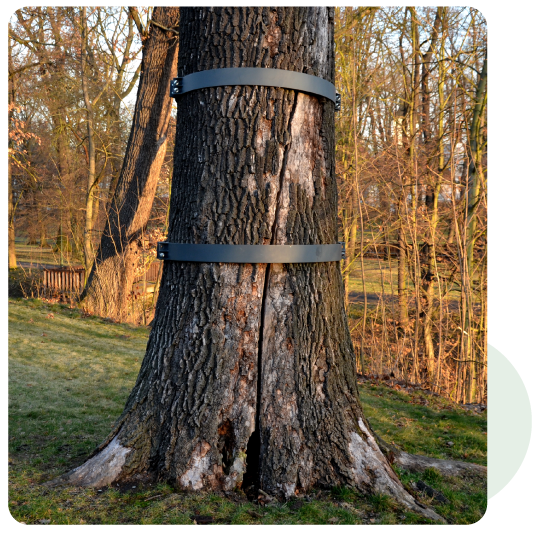
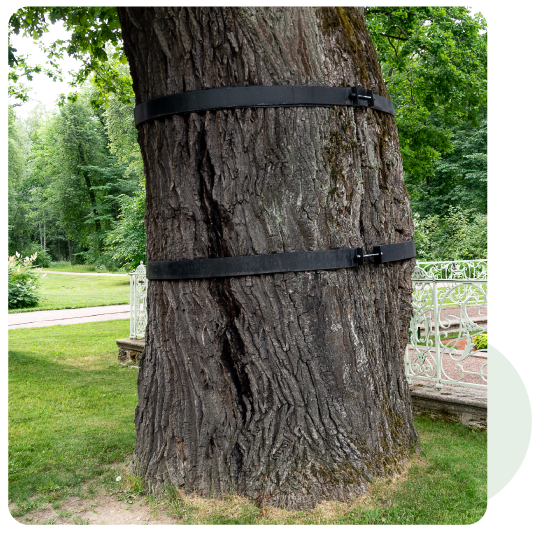
Fortunately, structural support systems such as our tree cabling, bracing, and staking offer a viable solution for these precarious situations. By employing these techniques, professional arborists can provide several benefits:

Prevent Breakage

Support systems can greatly reduce the like lihood of failure in weak or damaged areas of a tree, especially in severe weather conditions.

Preserve Heritage

Many old or sentimentally valuable trees can enjoy an extended life with the proper support.

Stabilize Youth

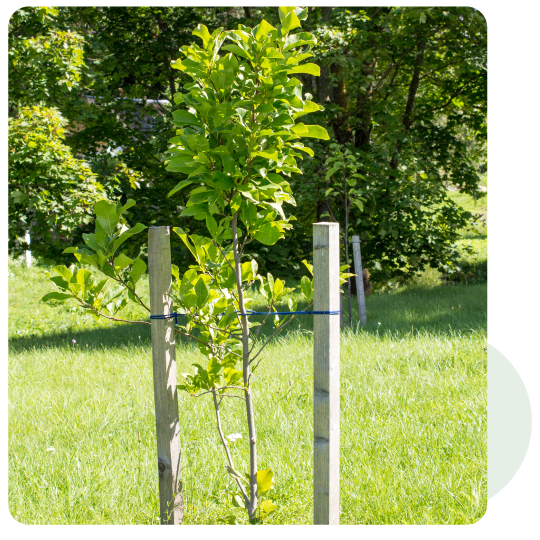
For trees that are newly transplanted, supports can offer stability while their root systems develop strength and reach.
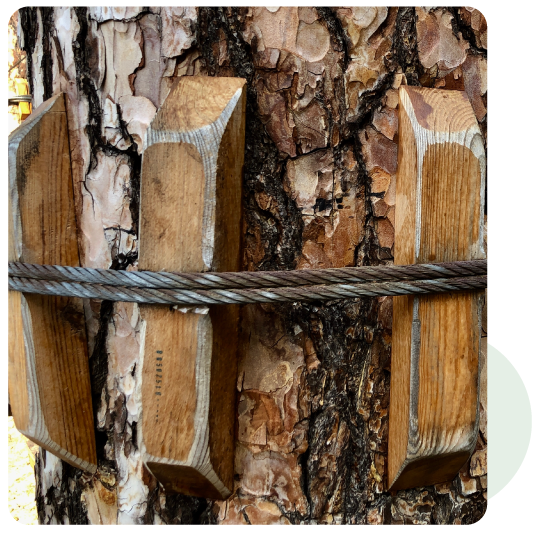
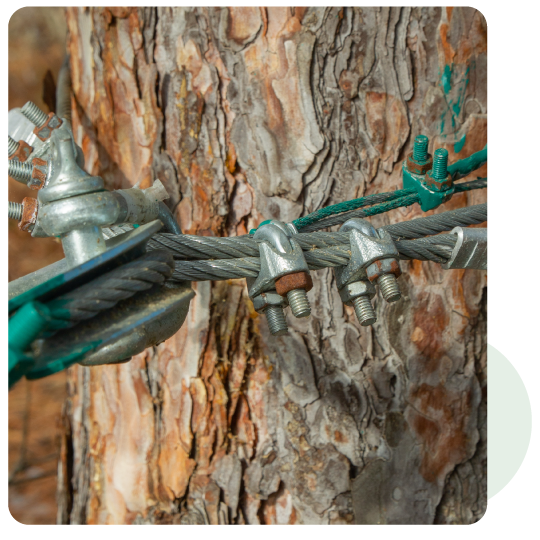
At Osorio Tree Services, our team of expert arborists is dedicated to preserving the health and safety of your trees. We conduct thorough inspections to identify any structural weaknesses. If your tree is at risk, we provide tailored advice about whether a support system could mitigate these dangers, and if so, which system would best suit your tree’s unique needs.

Investing in a professional tree bracing and cabling service is not just about fixing today’s problems—it’s about proactively safeguarding the future of your trees and all that lie within their shade. Contact us to learn more about how these essential services can enhance the longevity and safety of your beautiful trees.

Do Your Trees Need Extra Support to Thrive?

Ever wondered if your backyard trees could use a little help staying upright or healthy? Just like humans sometimes need crutches or splints to stabilize a broken limb, trees may benefit from supports like cabling, bracing, or staking. These tools help limit how much branches sway in the wind or give added strength to parts of the tree that aren’t as robust.

But hold on before you go DIY on tree support! While these aids can be super helpful, they can also be a bit like a hug that’s too tight—they restrict the tree’s natural movements. That’s why tree care pros think long and hard before deciding if your green giants truly need these interventions. They’ll consider if it’s a case of giving the tree a helping hand or if, sadly, the tree is too far gone and needs to say goodbye.

Only someone with legit training—like Osorio Tree Services—should be the one to set up these tree supports. These experts have the know-how to figure out which fix will work best, which gear to use, and how to install everything without making the tree go “ouch!” It’s just as crucial to keep things in check afterward—your arborist will keep an eye on it and tweak as needed to ensure your tree stays happy and your home safe from any falling branches.

Just think of arborists as tree doctors, prescribing the right treatment and care to make sure your leafy friends stand tall and healthy for years to come.

Main Tree Support Systems We Provide

Cabling: Security for Your Trees

Have you noticed the way some branches seem to dance wildly in the wind, threatening to break away from the rest of the tree? That’s where cabling comes in. Cabling is designed to limit how much branches, especially those with co-dominant stems, move and potentially harm the tree. Commonly, cables are installed high up in the crown or at weak junctions to reinforce them.

There are two main types of cabling systems to consider:

Your expert tree care provider can advise on the best system for your specific situation, ensuring your trees receive the appropriate support while maintaining their natural beauty.

Bracing: The Backbone of Your Tree's Structure

When a tree has several leading branches or stems that may cause instability, bracing is the answer. This technique involves inserting rods directly through the critical unions to secure them firmly. It’s somewhat like a surgical procedure for trees, where the support is placed inside to maintain structural integrity.  Bracing is often used in tandem with cabling to achieve optimal stability.

There are two types of bracing rods:

Considering bracing for your tree ensures that weak links are given the strength they need to endure the elements and continue to thrive.

Staking: A Helping Hand for Young Trees

Newly planted trees might stand tall and proud initially, but they often require additional support while their roots set in. Staking is the process of using either sturdy wooden stakes, wires, or straps to hold a tree in place and prevent it from toppling over. This method is most useful for young trees that have not developed a strong root system or have been planted in windy areas prone to uprooting.

While staking has its advantages, it’s imperative not to leave your tree staked for too long as it could hinder its development. The stakes and straps should allow for some sway; the natural bending motion in the wind is what helps the tree grow stronger at its base. Think of it as a regular exercise for your trees that builds resilience.

In practice, professional arborists will only stake trees when absolutely necessary and for the shortest duration feasible, to minimize any risk to the tree’s health and promote its natural growth patterns.

CALL NOW (845) 20593-9219